How to Practice Value Studies
First off, this is my first post. Welcome to Value Studies Coach! I built this app to help bring probably the most important exercise I do as a part of my atelier practice outside of the studio and into my home.
Now that we've got that out of the way…
Value studies are simply the best way to improve your ability to render an object.
What Are Value Studies and Why They're Great
Value studies are an exercise where you break down an image into its tonal (grayscale or colour) values. If you tried to track every value change in a reference, you would run into two problems:
- There are an infinite number of gradations and tonal changes.
- You only have a limited set of tones you can put on your canvas or paper.
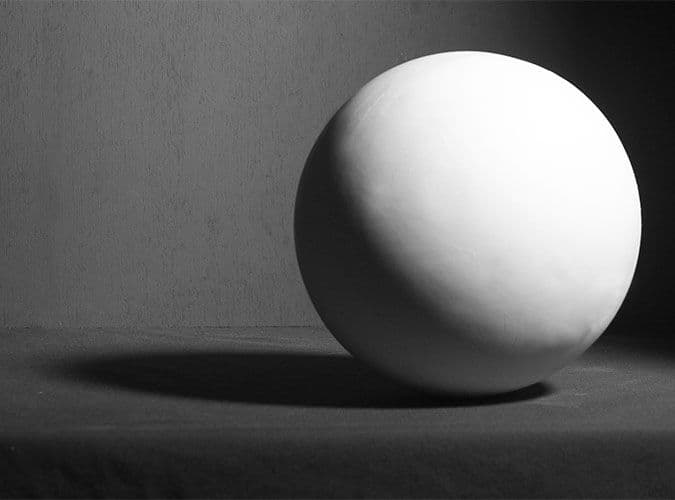
So instead of tracking every step, we mark the key tonal values that show the form of the image, like so:
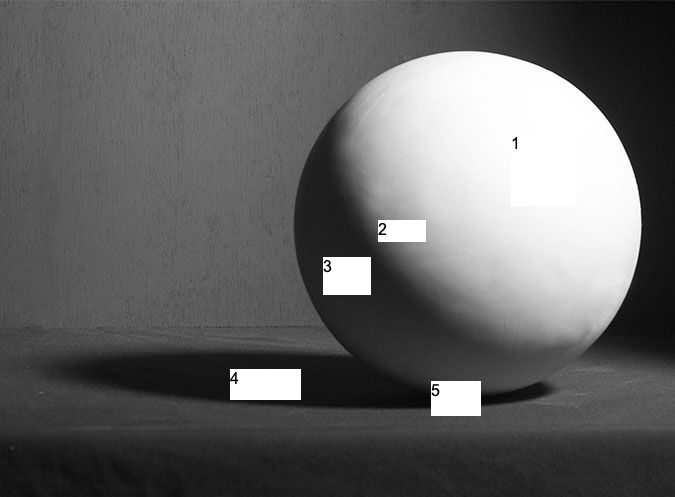
I decided to mark 5 values to communicate this form. In this sphere, the lightest light (marked as 1) is where the light is directly hitting the sphere and the darkest dark is the occlusion shadow where the sphere is touching the floor (marked as 5.) Given it’s one directional light, as the sphere turns away from the light, we see it get darker. As the shadow moves from the object and into the light, it gets lighter. These areas sit between 1 to 5.
It's a fundamental skill that every artist needs to master, but it can be tricky because you might not make your tonal steps big enough, or you might not go dark or light enough.
When you are starting off, the conventional advice is to "see" what you are drawing. You might come across maxims such as "you should be spending 50% of the time observing and 50% drawing." In statements like this, there lies a trap: if you don't know what to look for, you can easily get overwhelmed.
Value studies train you to find the most important values that communicate the form of whatever you are drawing, and then go from there.
How Value Studies Work: An Example
Let me show you how value studies work with an example taken from this website.
In this example, we're breaking down an image into its different tonal values. We've also made it grayscale to make it easier for us to get our tones right.
We can see that the darkest areas are around 10–15% and the mid-tone areas are around 70–80%. So when we paint it out, we get:
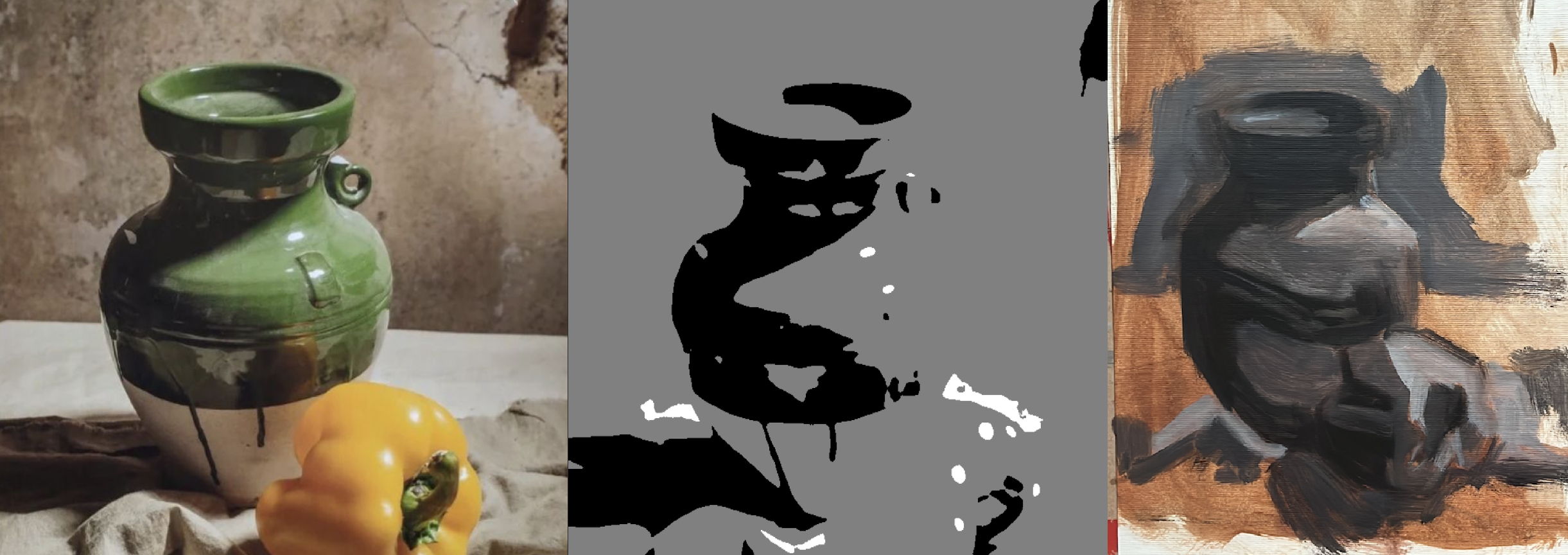
Not too bad for 15 minutes!
Hard Mode: The Challenge
Once you get pretty good at painting the broken-down values, you'll want to be able to do this without the guide.
To do this, simply:
- Hide the value breakdown and practice drawing the image from memory.
- Only reveal the value breakdown at the end to see how you did.
Make sure you are tracking your mistakes so you get better. And remember: art is fun, and in the words of a great inspiration (DrawABox)… do not grind.